Streamlining Project Delivery: Construction, Management, Maintenance, and Agile
Streamlining Project Delivery: Construction, Management, Maintenance, and Agile
Written by Marlyn Gregorio ୦ Posted last September 29, 2024
CONSTRUCTION
Construction fits into software life cycles in different ways depending on the development model used. In sequential models like waterfall, construction is a separate phase after extensive design is completed. In iterative models like agile development, construction activities are interleaved with design and testing within short iterations. Incremental models construct software in phases, each increment providing part of the functionality. The boundaries between design, construction, and testing depend on the life cycle model chosen.
Construction planning involves choosing appropriate languages, frameworks, and tools, defining the integration approach, identifying needed hardware and frameworks, determining team member assignments, and scheduling. A key decision is choosing incremental vs. big bang integration. Incremental integration constructs software components separately and then integrate them in stages. Big bang integration defers integration until all components are built. Incremental integration enables earlier validation and localization of errors.
Software construction metrics include code developed, modified, reused or discarded, code complexity, inspection statistics, fault fixes, effort, and schedule measures. Metrics provide insight into construction progress, quality, and improvements.
Managing dependencies in software construction involves tracking internal and external dependencies, avoiding unnecessary dependencies, preventing conflicts between dependent components, and ensuring untrusted dependencies are not introduced. Dependency software project managers help automate installation, upgrade and removal of software dependencies.
MANAGEMENT
 Constructing a pyramid was one of history’s earliest management goals.
Management is everywhere. Any time people work to achieve a goal, they are engaging in management. At least as far back as the building of pyramids in ancient Egypt or Mesoamerica, people have used principles of management to achieve goals. Today, organizations of all types—social, political, and economic—use management techniques to plan and organize their activities.
Two Aspects of Management
Management As People
Management As Process
- applying and distributing organizational resources effectively
- acquiring new resources when necessary
- analyzing and adapting to the ever-changing environment in which the organization operates
- complying with legal, ethical, and social responsibilities of the community
- developing relationships with and among people to execute the strategies and plans
Management Defined
MAINTENANCE
Maintenance, or technical maintenance, is a set of activities and practices with the objective of ensuring that machinery, equipment, and other types of assets commonly used in business are constantly and efficiently utilized. A good maintenance program puts watchfulness to being effective, and assures the succeeding operations, extended lives, and sustainability of machinery, assets, facilities, and businesses in general.
Most Common Types of Maintenance
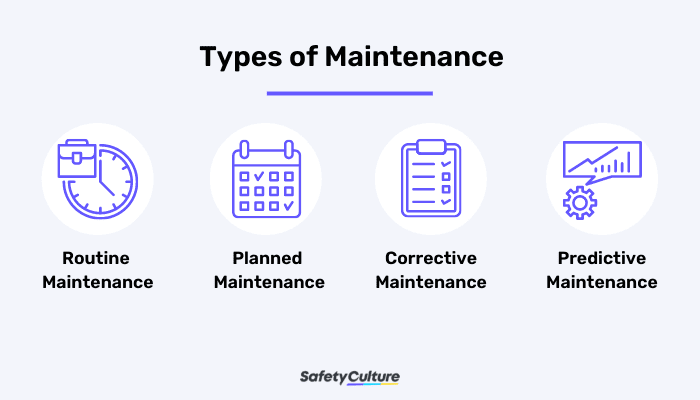
Routine Maintenance
Planned Maintenance
Corrective Maintenance
Predictive Maintenance
AGILE
The Agile methodology is a project management approach that involves breaking the project into phases and emphasizes continuous collaboration and improvement. Teams follow a cycle of planning, executing, and evaluating.
Whereas the traditional "waterfall" approach has one discipline contribute to the project, then "throw it over the wall" to the next contributor, agile calls for collaborative cross-functional teams. Open communication, collaboration, adaptation, and trust amongst team members are at the heart of agile. Although the project lead or product owner typically prioritizes the work to be delivered, the team takes the lead on deciding how the work will get done, self-organizing around granular tasks and assignments.
Agile isn't defined by a set of ceremonies or specific development techniques. Rather, agile is a group of methodologies that demonstrate a commitment to tight feedback cycles and continuous improvement.
Comments
Post a Comment